

I confess it.
I didn’t like the Africa Twin.
As a line in the 80s and 90s I preferred the Supertenere, which performed better on the road.
I tried one from a friend on a flat road and I didn’t like it, the engine was too quiet.
I tried it again later, in the mountains. I didn’t understand why this friend of mine was going so fast despite seeming relaxed through the hairpin bends and I understood everything. The chassis of this bike is simply superb. I was flying without realizing it. I wondered why my friends were going so slowly while they wondered why I was going like crazy. I was walking.
In the photo me and Bianchina, my first elaboration. An Africa Twin 650 below 185 kg in running order.
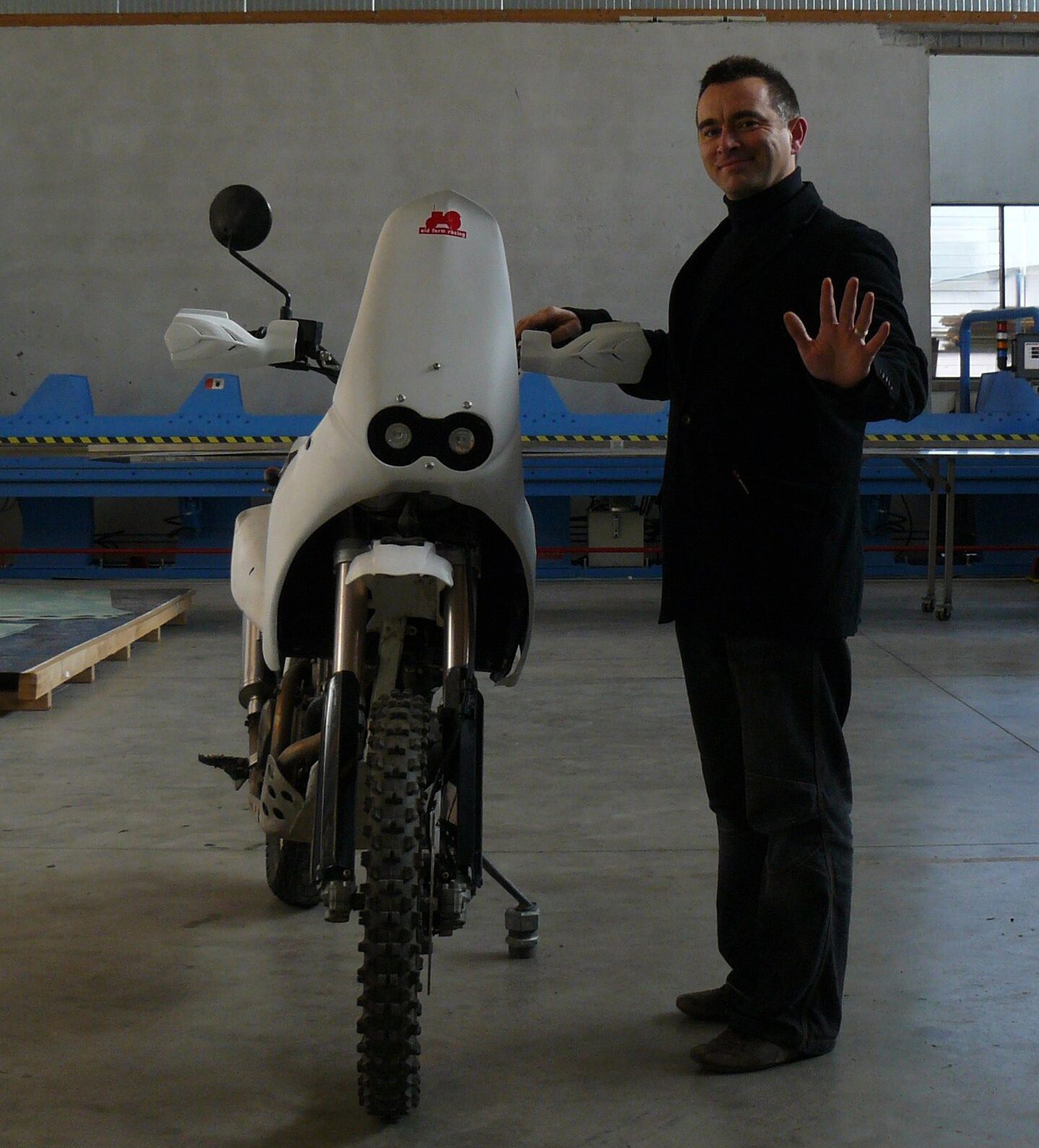
Africa Twin 650. RD03
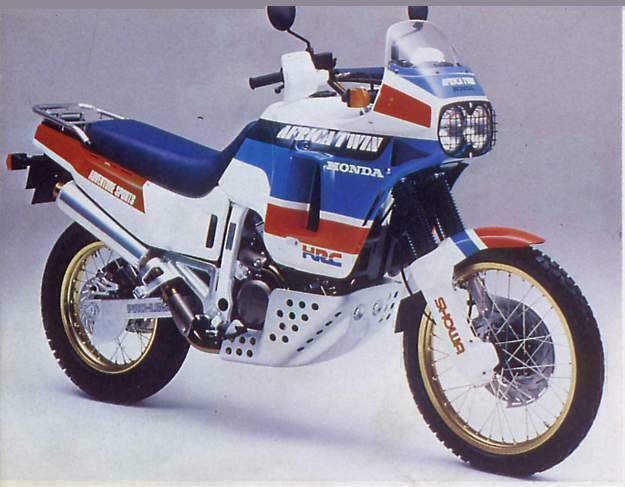
Africa twin 750 RD04
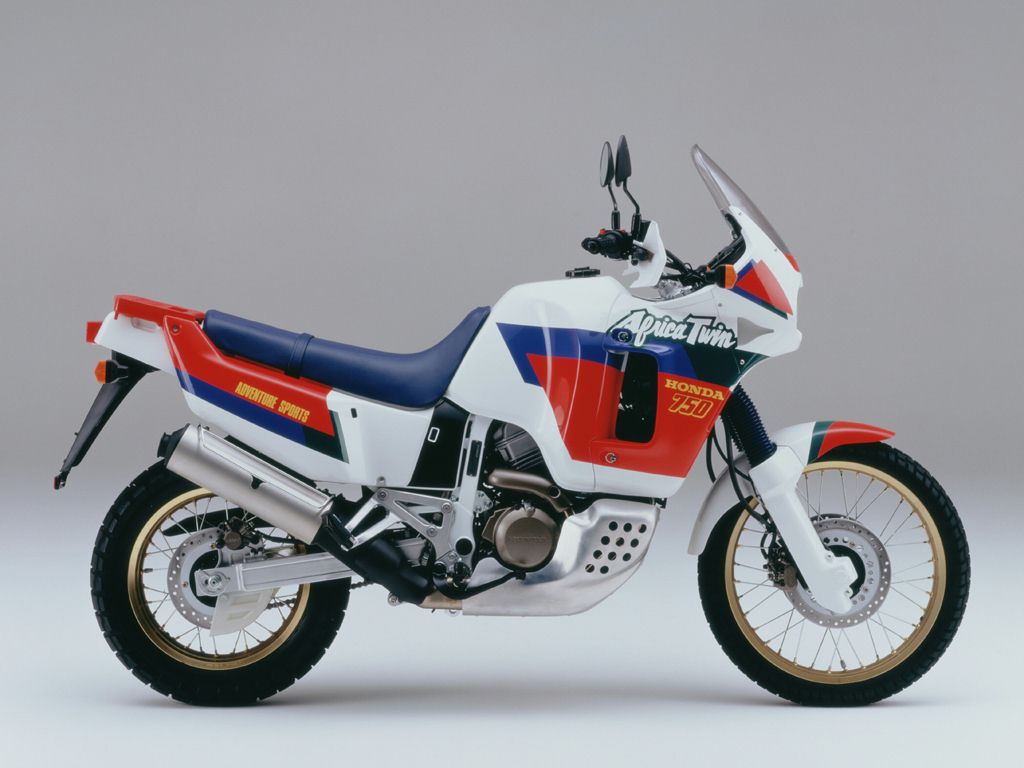
Africa Twin 750 Rd07

I bought one in 2005 and it was immediately a surprise. It was an RD03 650 and I placed it alongside the Ktm 950 Adventure that I had in the garage and discovered that it rode very well off road.
I immediately started to get my hands on it in an attempt to lighten it and improve its off-road use.
I researched compatible parts while trying to remedy the bike’s defects.
I discovered many things as I got busy building specific parts for my bike.
Since then I’ve continued to experiment, some with horrendous results, some with good results, and I believe I’ve created some of the most extreme Africa Twin designs we’ve ever seen. And I did almost everything on my own, gaining a lot of experience and having fun like when I was a child playing with Lego.
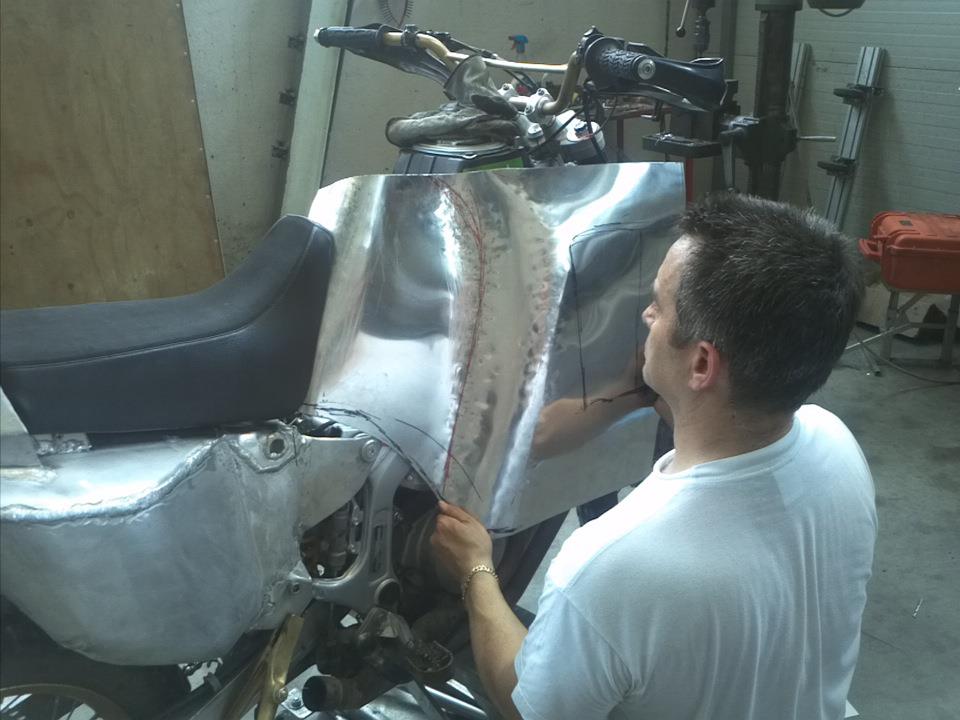
PHOTO: Craftsmanship has always been a great passion of mine.
THE CLASSIC FAULTS OF THE AFRICA TWIN
The Africa Twin is a motorcycle with excellent reliability and one of the longest-lasting on the entire world market. However, it has some intrinsic shortcomings that are best looked at immediately to avoid trouble or damage or remain stranded. It’s nonsense and it’s easily remedied.
Voltage regulator
The voltage regulator is a problem for all Africa Twins (and not only).
It is used to dissipate the excess current produced by the motor and it is important that it works properly.
I have found by comparing myself with many enthusiasts and with various tests that 90% of the problems come from oxidized connectors. As the connectors oxidize over time they no longer transmit the current perfectly and cause the contacts to switch on-off which causes the whole thing to fail.
Sometimes the regulator is fine but the connectors are KO. When I buy an Africa Twin I always cut off the connectors and directly solder the cables together and then insulate well.
It’s not like I have to dismantle the regulator every day, so when in doubt, I eliminate the connectors.
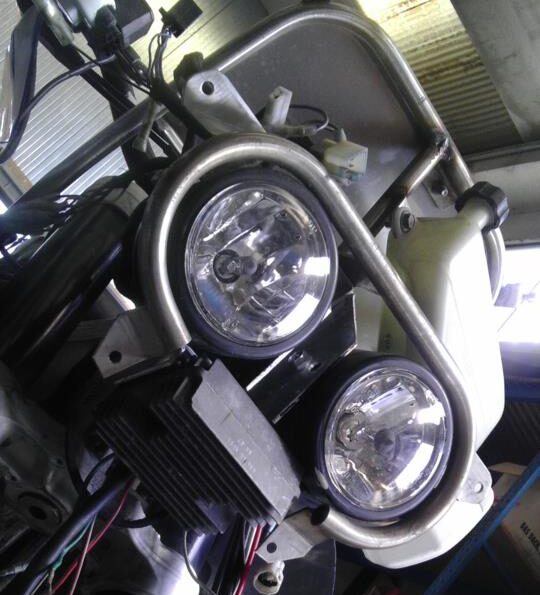
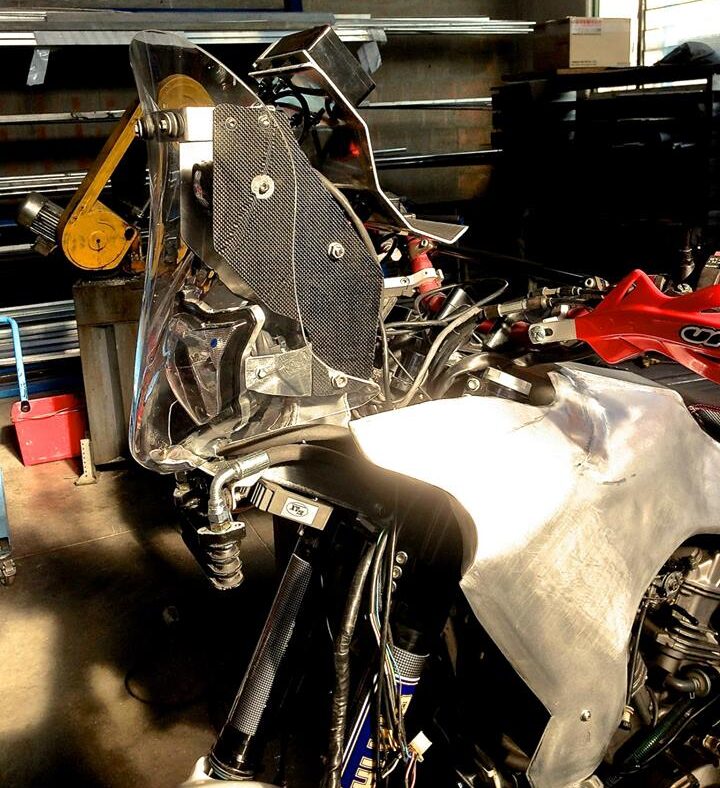
In the 04 the regulator is very close to the exhaust and this is said to have caused problems in super hot climates, if in doubt I move it. On my latest bikes I put the voltage regulators under the fairing to position them in the coldest point of the bike.
Picture 1
NXR Replica. Cold voltage regulator.
Picture 2
The voltage regulator in the cool, under the fairing.
The control units suffer from their position under and close to the saddle and over time end up rubbing with the saddle and breaking the connectors.
You have to remove them from there and lay them down, perhaps protected or fixed lower in the same compartment. Never had a problem with bikes modified like this.
However, there are aftermarket ones that cost much less than the original ones. You have to search on eBay Greece if I’m not mistaken.
Fuel pump
All Africa Twins have the same fuel pump as other bikes. Those fitted by the KTM 950 SM or Adventure are almost the same and suffer from the same problems. They last something like 50,000 km and then due to wear they stop working regularly. If you stay on foot and have a full tank you can connect the tank directly to the carburettor and you can get home. But be careful, keep the tank full, because the petrol will enter the carburettor by gravity and if the level drops too much you will be stuck again.
There is a kit that you can find on eBay to refurbish the original pump and if you have a bit of dexterity or if you have it done by a good electrician it can make the pump almost as it was originally. Several have installed alternative, vacuum or electric pumps. I know of people who have been left stranded with any type of pump. I have mounted all types and I was left with only the original ones and only after they had reached the mileages mentioned above. The moral is that you can fit the pump you want but I advise you to be careful and if you have to leave for an extreme trip, change the pump or bring a good spare one with you.
On the motorbikes that raced in Africa I saw the pumps mounted visible on the left side of the motorbike under the tank. Two were mounted, one connected and one not, but quick to connect in case of need. A pump that I would recommend is Facet, a brand that builds quality pumps that must last. But many people mount vacuum Mikunis without any problem.
In Africa Twins modified with the Transalp tank, the fuel pump could also be eliminated and the bike could run with the fuel flowing into the gravity carburettor.
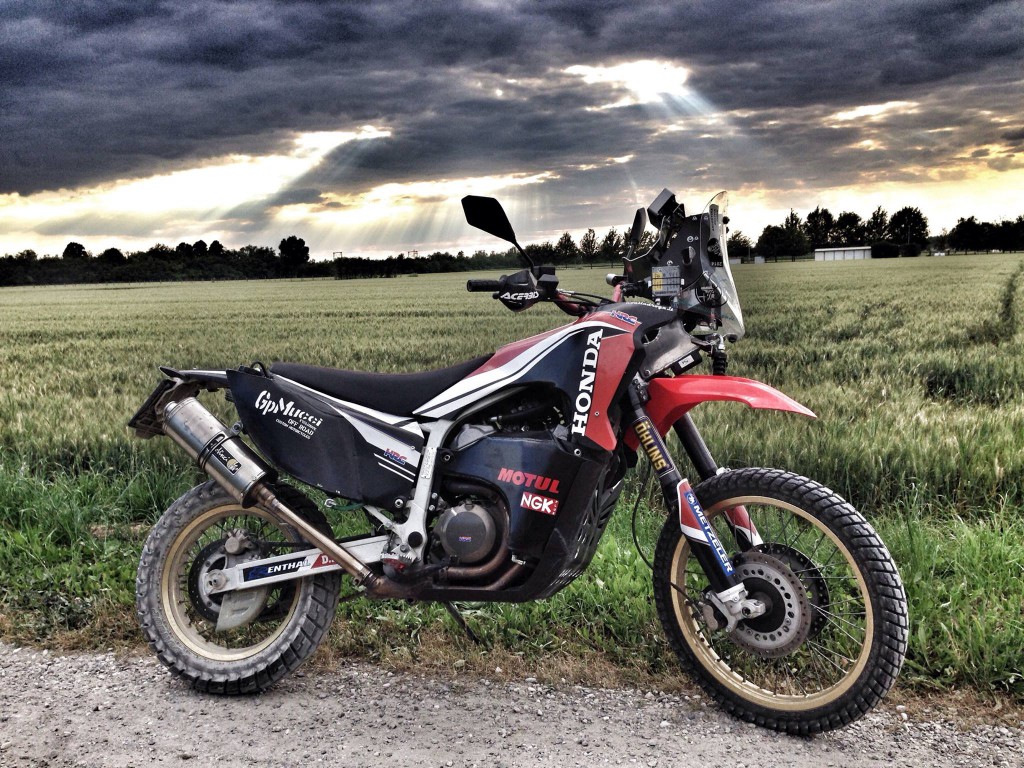
While on my bikes with very low tanks the standard pump is unable to lift the petrol, so I’m experimenting with a different pump.
I repeat, the Africa twin is not the only motorbike with fuel pump problems, but our motorbikes are certainly used intensely and are more likely to reach the fateful 50,000 km than other motorbikes.
PHOTO: The very low tanks of my latest Africa Twin put the standard fuel pump in difficulty.
Membranes
I believe that only the first two Africa Twins had the problem of the carburetor diaphragms breaking. I think that these breakages (as well as breakages of other rubber/plastic parts) are more frequent on little-used motorcycles. On eBay Greece there was a manufacturer who produced them at affordable prices.
We have also noticed problems with rubber manifolds becoming as hard as wood or cracking on very old and rarely used motorcycles. They are pieces that are found but are not frequent breakages.
It is rare for Africa Twins to have other problems, do regular maintenance and it will take you far and everywhere.
LIGHTENING THE AFRICA TWIN AND IMPROVING IT FOR OFFROAD
Although similar, the three Africa Twins have different frames, therefore requiring different interventions.
In general there are different types of interventions in lightening a motorcycle of this type. I try to identify which parts are useless for the use I have to make of them and eliminate them. For example, if I don’t need the fairing, I put an enduro spotlight. Then I look at the heavy components and try to replace them. With some motorcycles you remove three/four 7kg pieces and you have removed 21/28 and you have done the job. In others you have to hunt for twenty details that can be lightened or replaced to remove ten kg, as in KTM’s Superenduro or Adventure 990/950.
In RD03/04 the most immediate interventions are:
- Replace the original exhaust with another light one (also because heavier is difficult).
- Remove or replace the front block consisting of the headlight support frame, headlight and instrumentation (if I’m not mistaken it’s around 7 kg).
- Remove the tail support frame and replace it with a mudguard or something light.
- If you want something more extreme you have to get your hands on the tank. If you have enough capacity you can adopt a Transalp tank and saddle on your Africa Twin. At this point you will find the radiators exposed and you will have to remedy this in some way. In my creations you can find ideas and maybe one day I will publish a drawing of the cutting of the sides. But already at this point you have left many kg on the ground.
- You don’t have much left to lighten without spending a fortune and the bulk is done. If you adopt a more modern fork, adopt the entire front end. The Queen’s hoops are indestructible but they weigh a lot. If you fit a modern single disc front end you will have completely changed your bike. Especially in the case of the Africa Twin 750 rd04 in which a disc, a caliper and double pipe are removed.
- Obviously you’ve already removed the passenger footrests if you don’t need them and the central stand, even if its weight down there is barely noticeable. If you have changed the tank, fit a Mikuni vacuum pump or even remove the pump, being careful to create the tank-carburettor connection as straight as possible. You will have to make a dedicated sump guard because the original with the skinny bike is horrendous. We have entered the world of details. But you left something like 25/35kg on the floor.
For the 07 it is more difficult, there is less stuff to remove, but almost all the above points apply, except the rear mudguard support frame which in the 07/07A is one with the frame.
Some believe that the Transalp tank raises the bike’s center of gravity. More in-depth and overall reasoning would need to be done, however I believe that the kg removed are more important. Furthermore this is an extremely economical modification. You can always have custom aluminum tanks made by moving the weights almost wherever you want.
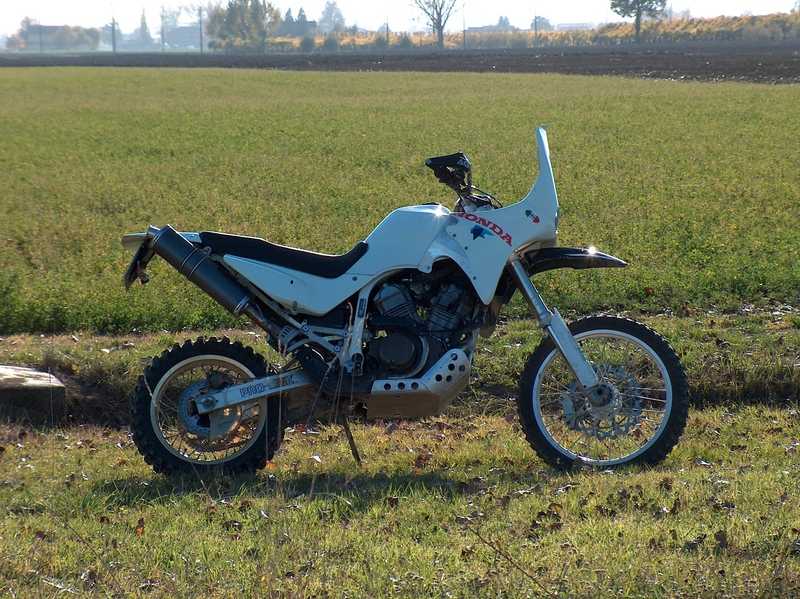
My Bianchina before the modifications, standard with the X-Racing exhaust was 220 kg.

Again, after various jobs, she weighed 182 kg, with incomparable handling.
Once you have lightened the bike as much as possible, it will already be more agile off-road. If you now want to improve it further you have to dig into your wallet.
The first thing you need to do is economical and ergonomic. You need to adjust the riding position to your size and taste. I don’t mind the original Africa Twin handlebar which I find spot on, I prefer to keep it turned up, with the horns pointing to the sky and with some riser thickness. But I found it even better with other handlebars such as the Fat Bar by Race tech or similar, there are a lot of them now. Virtually none of these handlebars are as tall as the standard Africa Twin handlebars so you will need to use risers.
The second thing that will drastically change the bike is the replacement of the mono and fork.
OTHER CHANGES TO AFRICA TWIN
The monos for the Africa Twin
I am not a reseller and I do not advertise to anyone. The monos all cost a lot of money. The revised standard is not bad. On one of mine I have a WP which is already better than the standard, friends have the Bitubo which seem excellent. The beauty of a local company like Bitubo is that you can contact them, ask them for advice on the setting and they generally answer you.
We had some made specifically for off road years ago, when we had the Motorally team and kept them mounted on lightened bikes. After an initial period spent adjusting them they were fine. On my latest Africa Twin Rally I have an Ohlins. Well, I find it spectacular, with a very remarkable range of adjustments, you can completely remove the shock-absorbing function and start from there. For me, and this is just my opinion, it is excellent. But if you are a beginner, like many, or don’t want to spend a fortune, I can confirm that the standard mono is not bad and neither are the forks. I know there are some who modify the Ohlins mono of the TT600 but we are entering a field unknown to me. These tips of mine are certainly not dedicated to a suspension trainer who knows a hundred times more than me. They are dedicated to the amateur who starts shooting on his motorbike or to the mechanic who does not know this motorbike in detail.
The alternative forks for the Africa Twin
If you are a fork builder it is useless to read here, you know more than me. Before throwing the stock forks in the bin, consider that they have rarely been serviced and that they often have the oil inside them that mother Honda put in them, when they should be replaced every few years. You could have surprises just by giving your forks a good service. But a modern enduro fork has advantages that the old and cheap original forks will not achieve, smoothness and travel. Weight is also king here, because the lower triple clamp of the Africa Twin fork is made of steel. Another motivation is aesthetic. In fact the traditional fork is very old.
If you only ride on the road, the original forks are fine, you can fit a pair of petal discs and with the right pads you will radically change the braking power of your Regina. If, however, you want to prepare an off-road missile, I warn you.
It is not easy to find springs of a suitable hardness for the size of our motorbikes. You can, for example, find a lot of 46mm Kayabas in second-hand markets. They are good forks and are cheap. They were mounted on many enduros including Yamaha. The springs you find on the market are good for single cylinders, you have to find suitable hardnesses.
So my advice is to choose forks (and it’s better if you bring the entire front end home) that also fit on twin-cylinder bikes. The easiest to fix are the WPs with a 48 mm diameter that fit the KTMs, even mono. They have the same diameter as the Adventure and SuperEnduro forks so you can find the springs you want. An alternative could be the 45mm Marzocchi Shiver. They are also fitted as original equipment on the BMW GS800 and were fitted on the HP2 and I believe on the Tiger 800XC, so you should find suitable springs here too.
In the case of the WP you have another advantage, Rugged Road, an English company that sells spare parts for adventure bikes, has in its catalog the steering head pin already made to mount the WP triple clamps on the Africa Twin. Ready with bushings and everything, so it’s one less fuss. This way you can do something discreet without spending a fortune. Obviously a suspension professional can advise you differently and perhaps have access to a whole series of springs that I don’t know about, I’ll just tell you about the problems I encountered and how I solved them.
18″ rim
If you want to race then you have to deal with the absence of 17″ rear tires and you will have to make the rear rim radius by fitting an 18″ channel. In Bologna we have FABA which also produces rims for homes, and every town has mechanics specialized in this. I don’t do extreme off road, so I prefer to leave the tire sizes standard.
Modification of the Africa Twin engine
I have never developed or had the Queen’s engine developed and honestly I do not recommend it. The greatest advantage of the Africa Twin is its durability and reliability.
I had the pleasure of trying a super-lightened 840. Wonderful, but at this point it is better to look at Ktm. You lose all the reliability and struggle to match the performance of the superb Austrian LC8, so why?
But if it involves light touch-ups and polished ducts then yes, why not. Among other things, I know that it earns a lot with little.